Showing posts with label sleep. Show all posts

Saturday, July 12, 2014

Possible Cause


This illustrates both my level of exhaustion and my obsession with pugs.

While “probably cause” had a better ring to it for the title of this post, I’m afraid that would be premature at best, but I’ll gladly take a new potential cause for my debilitating fatigue any day.

After being diagnosed with hypersomnia a few months ago, I had a lumbar puncture (spinal tap) to determine whether or not my spinal fluid contains an elevated level of a substance that acts like a sedative. In patients with elevated levels, my doctor is experimenting with using a drug called flumazenil to counteract its effect. He has seen some significant success among his patients. Having prescribed flumazenil for about 100 patients with elevated levels of the substance, he reports a 50% drug refill rate. This stuff is expensive and not covered by insurance, so people aren’t refilling it unless it works.

I learned on Wednesday that I do indeed have an elevated level of this “sleepy juice” and could not have been happier. Each new finding, each possible treatment offers a glimmer of hope that I can feel better.

Flumazenil is labeled for use as an injection to bring people out of sedation and treat overdoses of drugs like Valium. Though long-term efficacy and safety of treating hypersomnia has not been evaluated, the doctors at the Emory Sleep Center completed a small clinical trial in 2012. Below is an informative excerpt from the abstract.


The term 'hypersomnia' describes a group of symptoms that includes severe daytime sleepiness and sleeping long periods of time (more than 10 hours per night). Sometimes, hypersomnia is caused by a problem with the quality of sleep occurring at night, for instance when nighttime sleep is disrupted by frequent breathing pauses. In other cases, however, hypersomnia occurs even when nighttime sleep is of good quality. These cases of hypersomnia are presumed to be a symptom of brain dysfunction, and so are referred to as hypersomnias of central (i.e., brain) origin, or primary hypersomnias.

The causes of most of these primary hypersomnias are not known. However, our group has recently identified a problem with the major brain chemical responsible for sedation, known as GABA. In a subset of our hypersomnia patients, there is a naturally-occurring substance that causes the GABA receptor to be hyperactive. In essence, it is as though these patients are chronically medicated with Valium (or Xanax or alcohol, all substances that act through the GABA system), even though they do not take these medications.


I’ve been using Adderall to help me wake up in the mornings, which has definitely helped reduce the extent of my oversleeping and evening ritual of dreading yet another miserably exhausting day ahead. However, Adderall is a stimulant and takes time to start working. I wake up to take the pills at 5am, then go back to sleep and wake again with my alarm at 6:30 or 7. It also makes me feel jittery in the mornings and can’t be taken again later in the day without keeping me up at night. While it has been cause for great celebration and hope, it is not a perfect solution.

Flumazenil is not a stimulant. My doctor has described the difference with this analogy. If a car is driving too slowly, it may be sped up by applying the gas pedal, which is how a stimulant works. On the other hand, if the car’s parking brake is engaged, the gas pedal is not going to provide much help. Flumazenil removes the brakes, speeding the car up by the absence of something de-energizing instead of the addition of something energizing.

Flumazenil is now available in a small lozenge that dissolves under the tongue and a topical cream applied to the skin. I just took my first lozenge an hour ago. I think it will take time to evaluate the results, but I am encouraged to have been able to sit and write this post without falling asleep or dismissing the effort as overwhelmingly cumbersome. As you may have noticed from my increasingly infrequent posting, this is not something to take for granted.

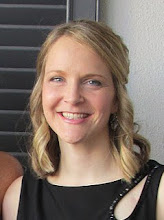
This is my amazing sleep doctor / neurologist Dr. Rye. He is nearly as committed to solving my mystery fatigue as I am. He also puts up with my sarcasm, though he is not nearly as cute as the sleepy pug.

Sunday, December 15, 2013

An Early Christmas Present


I was miserable on Monday, Tuesday and Wednesday last week. I felt like my body weight had doubled by the time I finished my first cup of coffee. I closed my eyes and rested my head in my hands when I went to the bathroom. I felt emotionally overwhelmed by the idea of carrying on this way for the rest of my life. I could barely keep my body upright during meetings and didn't even try at my desk. I avoided unnecessary conversations with coworkers. I can't quite articulate how weak and fragile my body felt by the time I arrived home each evening. I felt like I was dying.

In the preceding week or two, when I was trying a new medicine called Nuvigil, I had somehow managed to forget how miserable I had been every single day for nearly three years.

My new and beloved sleep doctor prescribed Nuvigil a few weeks ago as the first of several ideas he had proposed. I tried taking it at different times of the day as advised and didn't notice any improvements, but I did start feeling more heart palpitations than usual. With no noticeable change except the psychological discomfort that comes with frequent palpitations, I decided to stop taking the medication at the end of last week. It was only when I reverted to my previous level of agonizing fatigue that I understood the difference that Nuvigil was making. I decided I would start taking it again on Thursday morning and closely monitor how I felt.

I was near tears by the time of my Thursday evening commute, as I finally allowed myself to accept and celebrate the impact of this new medication. Finally, after being truly miserable and near despair for years, FINALLY, something was helping. After being told time and time again that I might not ever improve, I have seen evidence of tangible improvement. I am elated and encouraged and triumphant.

I still ran out of gas at the end of each day on Thursday and Friday. I still avoided people. I still rested my head in my hands whenever possible. I still crawled into bed exhausted at 9 o'clock each night. I still rested most of the weekend. I am not well, to be sure. And I am far from cured. But words cannot describe the gratitude and relief I feel for this measurable improvement. I'm certain I will forget about this win soon, when I become accustomed to and frustrated by my new normal, but I write this as my reminder. There is now not only hope, but reason to hope.

My dear friends Marguerite and Chris gave me a plaque not long after my transplant that read "fluctuat nec mergitur". Not only is it the motto of Paris (this francophile's favorite place on earth!) but its meaning couldn't be more appropriate for my situation: she is tossed by the waves but does not sink.

Saturday, October 26, 2013

Idiopathic Hypersomnia and a Sliver of Hope


I first became sick four years and one week ago and have since received countless diagnoses.

Cardiogenic shock. Translation – total system failure (or, as I like to call it, temporary death) caused by heart failure. Dilated cardiomyopathy. Translation – my heart was too large and too weak. Pleural effusion – fluid in my chest cavity. Renal insufficiency – kidney failure. Chronic kidney disease – after my kidneys started working again they became permanently diseased courtesy of a necessary medication. Diabetes – elevated blood sugar levels that cause your every thought about food to be considered through a new lens as irritating as a gnat that you can’t smack. Edema – swelling due to fluid build-up. Anemia – reduced red blood cell function. Hypothyroidism – reduced thyroid function. The list goes on.

One might think I would hope to end the slew of diagnoses, but not when another condition has gone unexplained for years. I have struggled with debilitating chronic fatigue for nearly three years now – THREE YEARS. I’ve dreamed of pinpointing its cause and have gone to great lengths in pursuit of a diagnosis. In my desperate attempt at solving this mystery, I admit I have hoped for positive HIV test results, hepatitis, multiple sclerosis and other diseases and conditions that make most people shudder.
A cure would be nirvana, but I would settle for a concrete cause – a diagnosis that ascribes science and legitimacy to the way I have felt all of this time. An undiagnosed debilitating condition is treated as frivolous by many and is absolute torture for the person affected.
My latest answer-seeking endeavor has been with the Emory Sleep Center here in Atlanta to follow up on an abnormal sleep study I had a couple of years ago. My new doctor is an expert in the field of sleep medicine and seems highly sympathetic to my situation. I participated in a second sleep study a couple of weeks ago, which was followed by a full day of sleep testing that was as close as I have gotten to Chinese water torture – more on that another time.
I haven’t seen my doctor for follow-up yet, but I did get my hands on the report. And halleluiah, there was indeed a diagnosis right there at the top: Idiopathic Hypersomnia. The earth-shattering translation goes something like this: “We have found that you are abnormally tired all of the time and require an extremely excessive amount of sleep, but we have no idea why.” Reading that felt like I had finally found the location of the elusive holy grail, but someone had replaced it with an empty red solo cup.
However, to put my cynicism aside for one moment [wait for it], I do maintain hope that my doctor will have some suggestions when I see him in person soon. I don’t really have another choice but to hope, do I? The good news is that with a diagnosis – no matter how vague – comes the possibility of treatment. Without that tidy diagnosis code that someone at my insurance company can type into a little box, all progress ceases and I look for the next specialist. So with my diagnosis code in-hand and an appointment coming up soon, I choose to be hopeful in spite of the bitter disappointment that has defined my last thirty-four months.

Thursday, September 8, 2011

Fire Alarm Lullaby


When you think about an industrial fire alarm going off, it may make you wince. Thoughts of that shrill sound and flashing strobe light don’t evoke positive feelings in most. But among the varied and unpredictable noises in the hospital, the fire alarm recently served as a lullaby for this girl.

Let me start from the beginning. Good news: I have now been sick twice since my transplant, and I have survived. One of my biggest fears last July was getting sick, since commonplace illnesses can be far more debilitating for those with suppressed immune systems. That, combined with the risk of rejection masquerading as a cold or the flu, really caused me to worry about getting sick post-transplant. I had a cold a few months ago that did stick with me longer than it probably would have affected someone with a fully functional immune system, but it was overall uneventful.

More recently I caught something more than a cold. I spent a full day in bed with a horrible headache, followed by vomiting six or seven times through the night until I finally called the heart transplant service in the morning. My nurse advised me to head straight to the emergency room to get checked out. The first priority was determining if I had an infection, which would have been dangerous for me. Fortunately, we determined it was just a virus. The second concern was eliminating the nausea in order to allow me to take my important medications, so I stuck around overnight to be sure I could keep food down.

Well, my visit happened to coincide with Hurricane Irene’s visit, and the hospital lost power late that night. I had been awake after yet another date with the toilet and was trying to get to sleep in spite of the erratic beeps and voices and other sounds that are omnipresent on the heart floors and probably throughout the hospital. Fortunately, the power loss (which was quickly remedied with generators) triggered the fire alarm. This was just the consistent white noise I needed. It lulled me right to sleep, I had the best sleep I’ve ever had in the hospital and I awoke ready to try some breakfast. Breakfast and then lunch stayed with me, and the challenge promptly became finding a route home from New Brunswick in Irene’s aftermath (which was obviously nothing compared to the damage a lot of folks faced).

I’ll consider pulling the alarm during any future visits when a lullaby is needed…but I hope they don’t have a prankster-prevention apparatus like the one featured in the ad below!

What happens to the people that legitimately pull the alarm...you know, when there's a FIRE?